December 18, 2006

Oh, right, the blog

So I'm spending my Christmas (and New Year's) in Middle Earth this year. It's impossible to make any kind of travel plans for New Zealand because every square meter of the island are covered in everything you could ever possibly want to do. I mean, all of it. Do I want to see this unbelievably gorgeous mountain, or the one over there? Do I want to go horseback riding on the North Island, or the South Island? What about kayaking? Caving? Bungie jumping? Do I want to see Mount Doom, or Moria? It's freaking impossible I'm telling you.

I'll carry on somehow though, I'm sure, and assuming the orcs don't get me I should be back to tell the tale. Unless I decide to just stay there and become a sheep farmer instead, in which case you would all of course be welcome to come visit any time.

Happy holidays, everybody!

October 13, 2006

"I'm Not Even Supposed to Be Here Today!"

Where I'm supposed to be is Xinjiang, midway through a two-week trip out West, getting myself hopelessly lost in the desert. Unfortunately my employers, in their infinite wisdom, put the kibosh on my vacation request, so instead I'm here hanging out with the fourth-graders. Who've recently taken to calling me "Johnny Depp-sensei". Which is itself kind of amusing, but also not quite what I was hoping for at this particular point in time.

I have about 18,000 items waiting in my Bloglines reader from the past two months of internet inattention, but I am going to try and slowly plug myself back in to the news again. And there was much rejoicing!

September 05, 2006

In Case Anyone's Wondering

I've taken a bit of a vacation from the internet for the past month or so. School is starting now, so it's liable to last a little while longer, until I get back into the usual routine. I'll be back eventually.

August 10, 2006

A Habitat Story

Another one from my turn at the SagaBlog:


Back in elementary school, I went to a small, private Montessori school in Bloomington, Indiana. Fourth through sixth graders all shared one classroom, with about thirty students in all. Moving into a huge public middle school afterwards was a difficult social adjustment, but Montessori was a great learning environment. One of my classmates, two years below me, was a girl named Kelsey. Her father was a professor at Indiana University (as was mine), and her mother was from Africa. Which would've been unremarkable except that this was 1994 and she was from Rwanda.

Estimates range from 800,000 to well over a million killed in the Rwandan Genocide, primarily ethnic Tutsi people at the hands of organized Hutu militias. From Wikipedia's article on the topic:
Ordinary citizens were called on by local officials and government-sponsored radio to kill their neighbors and those who refused to kill were often killed themselves. "Either you took part in the massacres or you were massacred yourself," said one Hutu, rationalizing an ambivalent mixture of regret, fear, and shame at being forced to kill Tutsis.

Most of the victims were killed in their villages or in towns, often by their neighbors and fellow villagers. The militia members mostly killed their victims by chopping them up with machetes, although some army units used rifles. In some towns the victims were forcibly crammed into churches and school buildings, where Hutu extremist gangs massacred them.

Being all of eleven at the time, the full scope of this probably only vaguely registered with me at the time, but we were all definitely aware of it to some extent because Kelsey's mother was in the local paper (someone we knew was famous!) for her efforts to reunite with her family back in Rwanda. We had fundraisers at school to help her raise the money to travel to the refugee camps, searching for the scattered remnants of her family. I remember it took several trips, but she eventually was able to reunite with her mother. After some time — the details are blurry with time by now, but I think it must've taken over a year — she was finally able to secure a visa for her mother and her brother, who I believe were the only survivors in her family.


I first volunteered with Habitat for Humanity in high school; my school had a chapter and, on the suggestion of one of my favorite teachers, a sponsor of the club, a few friends of mine and I went out one Saturday to lend a hand on the house of a young woman named Jennifer. I don't remember exactly what I did that first time (I think I worked on the porch, and maybe some of the interior walls), but it was fun enough that when, later that year, the Unitarian Church that I attended at the time (that's another story) sponsored the construction of two houses out on the north side of town, I decided to go join them again. And whose house should I find myself raising the walls on my first Saturday morning there, but my old classmate Kelsey's uncle and the wife he met in the refugee camps of Rwanda some four or five years prior. And let me tell you, that was pretty cool.

Every weekend after, I dragged myself out of bed at 7:00 on a Saturday morning to drive out and take part in construction from start to near-finish: driving nails, putting up siding, drywalling, painting trim, running wiring all over the house with an old retired electrician my grandfather's age, and more. It was amazingly fun, and rewarding — and, as a teenager youth with your usual modicum of adolescent angst, also good for adding a little broader perspective to life. I continued my participation with Habitat on into college, where my constant involvement made it one of the defining aspects of my life at the time; it remains one of the things I miss most from home.


There is a Habitat for Humanity Japan affiliate, although it acts primarily as a coordinating and support service for groups taking Global Village trips to nearby countries in the Pacific. Volunteer organizations like Habitat are hard to find here in Japan; the word, ボランティア, is not native to the language and as I understand it normally carries connotations of group civic responsibility and shared sacrifice, like when my students are told to go out en masse to pick up trash along the roadside for an hour or so at school. That's good and important and all; our New Horizon third year textbooks have a unit on volunteerism, but there as well, the activities described are officially-sponsored (school groups with a partner family in Nepal — why oh why did they change it from Bangladesh this year??? I could've done a great lesson with that..) — not from grassroots.

There are a number of possible explanations for the relative absence of individual civic volunteerism in Japan. There are the obligatory references to Japan's "group culture", and the widespread influence of religious groups (Habitat, which is officially an ecumenical Christian organization, gets most of its volunteers and support from church groups, although everyone is welcome) in American social life, which Japan lacks. There's also the notion that these things are the responsibility of the government authorities, and not the general populace.

But there's also real legal impediments to the growth of non-governmental organizations (NGOs). In a 1999 article in the magazine Pacific Affairs entitled "Wither Japan's Environmental Movement? An Assessment of Problems and Prospects at the National Level", Robert J. Mason writes:
Perhaps the largest single obstacle facing NGOs is the difficulty of obtaining tax-exempt status. Indeed, 90 percent of all NGOs in Japan lack such status. To receive tax-exempt status, an NGO must be officially recognized by the government as a "public-interest corporation." Eligibility conditions for such status are not precisely specified by law, but what is generally required are either capital assets of about U.S.$ 2.5 million (¥300 million) or membership numbers beyond the reach of the vast majority of environmental organizations. What constitutes a sufficiently large membership base is decided by the ministry with which the NGO is affiliated. All public-interest corporations must be chartered by a government ministry, which will have a significant say regarding such matters as the group's activities and board membership. In short, the process is time-consuming and the requirements, while not clearly defined, can nonetheless be rigid and restrictive.

By comparison, registering an non-profit in the United States is a matter of filing a couple of forms with the IRS, which looks them over to ensure that the organization matches at least one of the large list of existing categories of charity — a process which usually only takes a couple months at most, and which is not meant to allow government or bureacucratic control of the groups. (In the UK, there's a Charity Comission, which as near as I can tell does pretty much the same thing; Canadians, Aussies, and Kiwis will have to give me a hint as to how your system works here.)


So, why are my students freezing away in dilapidated old buildings while the bureaucrats at the city hall stay warm and cozy? One possible answer is the equally underdeveloped state of Japan's volunteer organizations. A democratic government that truly represents the needs and concerns of its citizenry depends on civil society groups — churches, environmental groups, and other volunteer organizations where people associate together based on shared interests and goals — to transmit the concerns of the people to the authorities outside of the election cycle, as well as to hold them to them when it comes time to vote. So not only am I having an awesome good time when I volunteer with Habitat — I'm doing my part to keep democracy strong at the same time. And they usually have free donuts in the mornings too!

Taiwan and South Korea achieved peaceful transitions to democratic governance in the 1980s after small local religious and environmental organizations banded together to create a national movement capable of articulating a demand for reform and accountability of the government to the populace. The Chinese Communist Party — with good reason — fears just such movement today. And Karatsu — well, I'll be waiting.


Got more time to kill? Check out this site, which offers a longer article on NGOs in Japan and offers more comparisons to how they operate versus those in the U.S. For other articles I've come across relating to the broader topic of civil society, check out my del.icio.us shared bookmarks on the subject.

August 09, 2006

寒いですね

I originally wrote this post for the Saga JET communal blog, based on some thoughts that I've been turning over in my head for a while here. I'm not sure if they've really been fully expressed here, but it's a start. The post is reproduced below.


If I'm honest with myself, I have to admit that I'm not always sure about the degree to which my presence as an ALT here in Saga really makes a major difference in the lives and learning of my young students. I think that it might be doing something, perhaps in subtler ways than I can easily discern, but even with that thought it's not clear how much of it is directly connected to me, as opposed to any other friendly gaijin plunked down in my spot. I do think, though, that my being here has definitely had an effect on me, which I suppose is at least something.

Smack in the center of the sweltering Saga summer (say that five times fast), it may require a powerful stretch of the imagination, but if you'll recall it was only six or seven months ago that we were all sitting around, shivering in the biting Siberian-tinged air, tethered to the warm envelopment of the kotatsu. That is assuming we were at home; in the half-century old concrete hulks that serve as schools here in Karatsu, there was no respite. Except that, as a teacher, I could get away with wearing a heavy jacket, and retreat between classes to hover over the space heater in the shokuinshitsu to thaw my hands; unless they could think of an excuse to come visit a teacher for a few minutes, my poor sailor-suited students had no such escape.

I think it was probably the unreasonableness of teachers who would yell at students who dared to put on gloves or scarves in the frigid classrooms that was the most maddening aspect of it all, but almost equally galling was the thought that here I was, in one of the richest nations in the world, and they can't even manage to heat their children's schools! Aside from the basic issue of social priorities, the cold also had clear and demonstrable effects on the students' ability to learn and function — namely, they were too busy shivering to be bothered. It did give me an opportunity to teach the words "central heating" and "insulation", but that didn't really do much to solve the problem.

One day I expressed some of this frustration to one of my JTEs; her sympathetic response was "Yes, that's true... but Japan has no oil." At the time I think I was pretty dismissive of this idea: they appear to have enough energy to keep the city hall and the goddamn 7-11's warm, so I think there might be a little more to it than that. I still think that's the case — and tomorrow I'm going to make an effort to explain why I think these priorities might become distorted in the Japanese system —but I have to admit that her comment has stuck with me and, in a way, made me reconsider — or at least reassess — some of my assumptions.

I was born into an era of American supremacy. Although I was alive for its last few years, I have no memory of the Cold War, and my formative young adult years during the 1990s were ones where the American model appeared to be ascendant and essentially unchallenged. By virtue of my birth I have been extremely lucky in the opportunities available to me — the JET program's shared requirement of a college degree means we have all been extremely lucky, relative to the majority of the rest of the world today. In raising me I think my parents made a real effort (one I hope I'm able to emulate, some day) to ensure that I would be aware of and grateful for these gifts, and I've tried to do my part for others less fortunate, to date principally through volunteering with Habitat for Humanity during my four years at college. But surrounded by the social and physical infrastructure of the world superpower — clean water, cheap energy, good schools — it's hard not to take some of it for granted. The Japanese don't have abundant natural energy reserves, or a globe-spanning navy capable of stabilizing shipping lanes, or the world's biggest economy. The United States does, and while it doesn't explain the whole story about why my students are expected to suck it up and deal with freezing, uninsulated, unheated schools, I think it might well have more to do with it than I initially recognized. And if this is coming from the world's second-richest economy (even if we are living in one of its poorest sub-divisions), what about the rest of the world?

The implications of this are challenging. One of — if not the — best things I've done in my life has been my work with Habitat for Humanity. While I recognize that the elimination of substandard, poverty housing across the globe (as Habitat aims to do) is a goal far greater than anything I'll ever be able to achieve, I know that I have personally contributed my sweat and money and effort towards build an affordable home for over fifty families across the United States. However small the scale, that has made an undeniable impact for those families, helping them achieve a baseline of stability and opportunity, and I'm grateful for the chance to have been a part of it. (Building a house is, incidentally, also tons of fun.) But my experience in Japan, and on my trip to Bangladesh this past Golden Week on a Habitat Global Village trip, has shown me the great degree to which poverty can be relative. I don't think it diminishes the real need of poor Americans, but this gap between the U.S. standard of living and that of other countries may mean I have to reassess my assumptions. What constitutes a "simple, decent" home in the United States is drastically different from one in Haluaghat, Bangladesh, and one in Japan.

What's difficult about this is the accompanying notion that the world cannot, in fact, afford for all of its peoples to enjoy the standard of living that I as an upper-middle class American was born into thinking as "fair". And not just unaffordable in terms of monetary economics but also the natural resources that build and fuel that economy. To take an extreme example, China has been developing at full tilt for the last couple decades, the authority and legitimacy of the Communist Party largely dependent on continued economic success, and it still has huge masses of rural poor in its center waiting for their turn. Personal automobile ownership — a symbol of the American Dream if there ever was one — is growing, which is liable to raise demand for energy even further. China's growing hunger for energy reserves has driven up prices worldwide. All this development has had horrific environmental consequences, poisoning China's rivers, stripping its mountainsides, and polluting its air — and ours. An attempt by the whole world to bring their standards of living up to those of America, barring some miraculous discovery of cheap, clean energy, would probably have seriously negative consequences for the future.

America got there first — but can anyone else join us?

August 08, 2006

Open Source

Radio Open Source has just done a show based on a topic I suggested a month or two back. The issue is China's rise: how is its growing energy resource consumption shaping its presence in developing countries in Africa, Latin America, and the Middle East, and what implications that has for U.S. foreign policy. The conversation takes a number of interesting tacks beyond my initial topic proposal, and features commentary from Thomas Barnett and others.

This was my comment on the show:

I wasn't able to listen to the show live (time zone differences pretty much rule that out) but I've heard it now. Very interesting discussion, ranging over quite a broad range (I wrote a senior term paper on the Uyghurs, so they're a bit of an interest of mine as well). Glad to see I was able to squeak in my question before it went to air.

For me the two most interesting points raised during the program were Thomas Barnett's suggestion that given China's mercantalist program of relatively shallow, extractive relations with countries in L.America, Africa, and the M.East, and their limited ability to spawn broader economic development, they will increasingly be seen in those countries as the negative face of globalization. A number of the China/Africa articles I've collected in my bookmarks suggest such reactions are already beginning, particularly in cases where cheap imported Chinese labor is supplanting locals.

Equally important I thought was John Pomfret's response to my question, where he suggested that the Chinese global ruleset (to use a Barnett-esque turn of phrase) was essentially undefined, outside the basic bottom-line business of business. I would subscribe to Dr. Barnett's later comment, where he says that we have come to the conclusion that dictatorships are not viable long-term solutions for development; that's actually part of the reason why a rival "Beijing Consensus" cocerns me, since I think a country with as many unaddressed internal weaknesses as China (whose long- or even mid-term stability I am unassured of) is not a particularly good model for world-wide emulation, at least as long as it retains its current autocratic and form.

Suggestions for August are open, so if you'd like to see Christopher Lydon and his future guests tackle another topic of interest to you, do drop them a note.

July 29, 2006

This Week in Private Military Contacting

Here's a collection of articles on issues related to private contractors that passed through my RSS newsreader over the past few days:

• The U.S. Army Corps of Engineers has halted a high-profile children's hospital construction project contract in Basra, after contractor Bechtel (they of the ill-fated Big Dig) overran costs by %150 and lagged over a year behind schedule. Bechtel, which subcontracted the job out through several layers of companies, blamed security concerns for the problems.

Bechtel estimated that as much as 50 percent of its expenses on the project were overhead costs, which were paid with American money separate from the $50 million construction contract.

David Snider, a spokesman for the United States Agency for International Development, the State Department agency in charge of the project, said that technically, Bechtel’s contract was not being terminated because the contract did not actually require the company to complete the hospital.

“They are under a ‘term contract,’ which means their job is over when their money ends,” Mr. Snider said. So despite not finishing the hospital, he said, “they did complete the contract.”

A confidential report commissioned by the development agency criticizes it for failing to properly account for all of the costs of building a functioning hospital. The agency is likely to face further criticism as it seeks additional money to complete the hospital as part of an Iraq reconstruction program that has increasingly come to be seen as overpriced and ineffective.

As the article mentions, this follows the Army Corps' cancellation last month of another large contractor, Parsons (which happens to be the other main partner in the Big Dig, actually) after it failed to complete several prison facilities and hospitals in a timely or cost-effective manner.

• The Virginian-Pilot of Hampton Roads has an extensive six-part series on local firm Blackwater USA, which has become one of the highest-profile private military contractors today. Lots of good content here - its founding, its leadership, its experience in Iraq and post-Katrina New Orleans, and more. Check it out.
An image of strength is vital in this muscle-bound business, and Blackwater is a top dog in its field. In a decade, the company has grown from a sketch on a scrap of paper to a superstar in the rapidly expanding universe of the private military industry.

It's a controversial arena, deeply divided by an international debate over the growing use of hired guns. Blackwater has been a lightning rod in the middle of it all since March 31, 2004, when the company's name became linked with the grisly image of charred American corpses hanging from a bridge in Fallujah.

None of that has hurt the bottom line. On any given day, Blackwater has as many as 3,000 security contractors working in far-flung hot spots and some 500 paying clients in Moyock - learning to crash cars, shoot targets, board ships, storm schools, rescue hostages, bust down doors.

At Blackwater, one thing is perfectly clear:

There is big money to be made in a world full of bad news.

California Representative Henry Waxman and the House Government Reform Committee have released a new report on waste and corruption in Department of Homeland Security contracting procedures. The Washington Post gives the outlines:
Lawmakers say that since the Homeland Security Department's formation in 2003, an explosion of no-bid deals and a critical shortage of trained government contract managers have created a system prone to abuse. Based on a comprehensive survey of hundreds of government audits, 32 Homeland Security Department contracts worth a total of $34 billion have "experienced significant overcharges, wasteful spending, or mismanagement," according to the report, which is slated for release today and was obtained in advance by The Washington Post.

The value of contracts awarded without full competition increased 739 percent from 2003 to 2005, to $5.5 billion, more than half the $10 billion awarded by the department that year. By comparison, the agency awarded a total of $3.5 billion in contracts in 2003, the year it was created.

Among the contracts that went awry were deals for hiring airport screeners, inspecting airport luggage, detecting radiation at the nation's ports, securing the borders and housing Hurricane Katrina evacuees. Investigators looking into those contracts turned up whole security systems that needed to be scrapped, contractor bills for luxury hotel rooms and Homeland Security officials who bought personal items with government credit cards.

While many of those problems have been disclosed, today's report is the first comprehensive survey of the government's own investigations into contracting mismanagement in the domestic war against terrorism.

"Every dollar that is wasted on a contract is a dollar less that could be used to make Americans more secure," said former department inspector general Clark Kent Ervin. "This kind of abuse constitutes a security gap all its own in America's defense." [my emphasis added]

For a broader examination of the Bush administration's use of private contractors in Iraq, Katrina recovery, as well as homeland security, check out the House Reform Democrats' Dollars, Not Sense: Government Contracting Under the Bush Administration.

• Finally, at the blog MountainRunner, a review of the book "A Bloody Business".

July 20, 2006

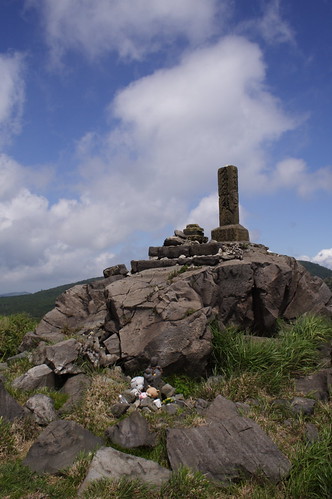
Kirishima National Park

July 13, 2006

Please Insert COIN

Eric and the Armchair Generalist have beat me to the punch on the Army's new counterinsurgency doctrine, but if I may risk a bit of redundancy, I'd like to finish off this draft on the subject that I've been kicking around for about the past week.


Cobra II

For starters, I recently (actually about two weeks back by this point) finished Cobra II, by New York Times reporter Michael Gordon and retired Gen. Bernard Trainor. Despite being over 600 pages, it moves along at a fast pace, giving a thorough accounting of the planning and execution of the military's campaign for Baghdad from vantage points both on high and close to the ground. (This NYT article from last March contains a number of the highlights; the authors also spoke about their work at the Council on Foreign Relations.) Some of the episodes therein have already been related at book-length detail by other embedded reporters — Rick Atkinson with the 101st, David Zucchino on the "Thunder Run" through Baghdad — but Cobra II does seem to cover the whole length and breadth of the invasion, from initial planning cycles to the regime's fall (Gordon and Trainor make use of the Iraqi Perspectives Project to add details of Saddam's egregiously misdirected war planning) and finally Bremer's arrival and disbanding of the Iraqi army (-- I'd like to see an equally dense overview of the Coalition Provisional Authority's actions in Iraq, but I guess we'll have to wait a while for all of it to come out).

The book is packed with operational details — if anything, the addition of a cast list to the several pages of maps at the front would've been a helpful aid for readers like me who sometimes have trouble keeping straight the many characters and units involved in a big military ensemble like this. Gordon, who was embedded with land war commander Gen. David McKiernan's command during the conflict, provides plenty of perspective from the halls of the Pentagon and CENTCOM's Tampa headquarters, although White House decisionmakers (save Rumsfeld) are generally absent from this DOD-centered narrative. Of course, that absence from the Iraq mission is probably in no small part due to Rumsfeld's insistence that he and he alone would be in command for the Iraq operation; his famous bureaucratic power player's skills for seizing control are amply on display in the book's early pages as he shuts out State and CIA, and wears down his generals (viewed as too conservative and risk-averse to accept the new logic of "transformation") into producing a plan that conforms to the SecDef's vision of modern war. As much as Rumsfeld might like to deflect responsibility, understanding as he did "that there was political value in being able to stand at the Pentagon podium and say that the Bush administration was implementing the military’s plan," his fingerprints are quite clearly present throughout the entire process, from discussions of initial force size to the raw logistics of deployment to the forces advancing on Baghdad ("Blue Force Tracker" and other revolution-in-military affairs network technology allowed the SecDef to closely track the war's execution, but with no corresponding icons for the fedayeen irregulars that would prove the main center of enemy resistance, it produced a distorted view of the conditions on the ground that reinforced Rumsfeld's view of his generals as overly conservative and cautious) through to the premature "off-ramping" of units not yet deployed as soon as Saddam's collapse appeared assured.

As for Gen. Tommy Franks, who Andrew Bacevich slammed in a review of the CENTCOM commander's autobiography American Soldier (which I'll confess to not having read), Gordon and Trainor's portrayal of him is if anything even less flattering than that of Rumsfeld. Franks might've been a fine artillery officer and no doubt has some real skills in directing fire, maneuver, and military logistics, but in Cobra II's pages the overall commander of Operation Iraqi Freedom displays a dismissive attitude towards the political future of post-invasion Iraq and a lack of responsiveness to his junior officers' ground situations. Having reached Baghdad and toppled the regime, he and his civilian superiors in Rumsfeld's office are already quite ready to congratulate themselves on a job well done, pack up US forces, and leave, expecting (and hinging their planning on) a "'Wizard of Oz moment' ... After the wicked dictator was deposed, throngs of cheering Iraqis would hail their liberators and go back to work under the tutelage of Garner's postwar organization and it teams of advisers attached to Iraqi ministries — in some cases, no more than a single individual." Well, things didn't quite work out that way.


Impediments to Innovation

After finishing Cobra II I next picked up John Nagl's Learning to Eat Soup With a Knife: Counterinsurgency Lessons from Malaya and Vietnam. While Nagl does discuss the techniques of counterinsurgency employed in both those conflicts, the real focus of his study is the extent to which the British and American armies who fought in those two wars were learning institutions. In order to process individual-level innovation into organization-wide changes in behavior, successful learning institutions must promote suggestions from the field; encourage subordinates to question superiors and policies; question the basic assumptions of the organization at regular intervals; bring high-ranking officials into close contact with those on the ground; and developing standard operating procedures from local innovation rather than central dictate.
The questions aim at determining not just whether an army is interested in the collection of data — promoting suggestions from those engaged in combat — but, far more important, whether the institution is willing and able to apply the information to create change in procedures, organization, training, and thinking about conflict. ...

The most critical aspect of the learning process is not the innovator ... [t]he key to organizational learning is getting the decision-making authority to allow such innovation, monitor its effectiveness, and then transmit new doctrine with strict requirements that it be followed throughout the organization. (my emphasis)


Nagl's assessment is that, despite some bright spots (such as the Marines' Combined Action Platoons) the US Army was not an effective learning institution during either its early advisor phase or later combat phase in Vietnam. Its strong organizational culture — Nagl quotes Eliot Cohen describing its core as "[t]he preference for massing a large number of men and machines and the predilection for direct and violent assualt" — prevailed in the war's aftermath as well, as counterinsurgency lessons were shunned in favor of a reorientation towards the Fulda Gap and conventional AirLand Battle against the Soviets. Conventional warfare continued to define the Army's institutional identity post-Cold War as well, with the majority of the officer corps embracing the Powell Doctrine of overwhelming force, rather than a mixed political-military counterinsurgency doctrine of minimum force. Having failed to prepare as an organization for this kind of war, the results are not entirely surprising: "For Franks," Bacevich concluded in his review of American Soldier, "war is a matter of engineering—and generalship the business of organizing and coordinating materiel". By and large Gordon and Trainor's portrayal in Cobra II accords with this. Their narrative stops shortly after the fall of Baghdad, but in the book's epilogue they offer a retrospective on the errors of commission and omission that served to produce the deteriorating situation we face in Iraq today:
American troops themselves were quick to identify the nature of their [unconventional] enemy... [b]ut the American war plan was never adjusted on high. Tommy Franks never acknowledged the enemy he faced nor did he comprehend the nature of the war he was directing. He denigrated the Fedayeen as little more than a speed bump on the way ot Baghadad and never appreciated their resilience or determination. ... Once Baghdad was taken, Franks turned his attention elsewhere in the belief that victory was his, never realizing the irregulars he maligned constituted the real military center of gravity, on that had not surrendered.

More important, Rumsfeld failed to heed his own counsel on defense planning. From the day he returned to the Pentagon as George W. Bush's defense secretary, Rumsfeld unscored the need to be prepared for the unexpected. ... Success depended on agility: the ability to adjust the battle plan in the face of threats that could be neither predicted nor forseen. Yet Rumsfeld was so confident of the validity of the prewar plan that he questioned the need to deploy the 1st Cavalry before Baghdad fell. Just a week after Baghdad was seized, the White House, Defense Department, and CENTCOM were focused on withdrawing troops and replacing them with less capable foreign troops instead of deploying the assets that would be needed to hedge against new threats.

With these impediments to innovation at the highest levels of command, an analysis using Nagl's methodology would, I think, have to conclude that the US military's learning abilities during the Iraq invasion and early occupation period were, at best, mixed.


Lessons Learned?

Nagl's book does make clear that there is always a learning curve in counterinsurgency operations, even for militaries accustomed to small wars, like the British in Malaya were — every such conflict is different, and policy can't begin to adapt until errors are first recognized, which will take time even under optimum circumstances. Three years into Iraq, it does appear that the U.S. military establishment is beginning to seriously develop a counterinsurgency program. The biggest sign of this is the recent redrafting of the Army's 20-year old doctrine for counterinsurgency, willfully abandoned after Vietnam but now approaching completion under the guidance of Lt. General David Petraeus (whose conduct in this regard was highly praised during his time in Iraq) and Lt. Gen. James Mattis, who commanded the 1st Marine Division in the invasion. Although the work has yet to be published officially, the Federation of American Scientists' Secrecy News has a copy of the advance draft, and Fred Kaplan gave it a run-down in Slate this past weekend.

I haven't had time to read through the thing but expect to do so during my summer vacation here sitting around the Karatsu City Board of Education. It's not the only sign of an increased attention towards counterinsurgency, either, as there have been a number of articles in the past week or so on the military's efforts to apply lessons from Iraq to the development of counterinsurgency capabilities. There's a story from the Christian Science Monitor and a similar piece in the LA Times describing a two Marine training simulations, one at Quantico and another out in the California desert. David Axe relates the operations of the Center for Army Lessons Learned (CALL) at Ft. Leavenworth, Kansas, whose staff has increased more than three times over (to 130) since the invasion of Iraq in 2003. The FAS Secrecy News blog offered a handful of recent Marine Corps publications on counterinsurgency as well.

Assuming for the moment these reports accurately reflect a real shift in the organizational culture of the military (and more specifically the Army, as the Marine Corps has always been much more comfortable with this stuff, since its early organizational culture was greatly influenced by the "small wars" it was tasked to fight) and a new appreciation for the difficulties and importance of effective counterinsurgency, the question I suppose is whether this is all too late to make an effective difference in Iraq. Lt. General Peter W. Chiarelli, currently the number two American commander in Iraq and who overseer of the Haditha investigations, recognizing the importance of relations with the civilian population, is increasing scrutiny over damage and deaths inflicted by coalition forces. But the Post article again emphasizes the cost of these belated changes in the way the military conducts itself in Iraq:

Chiarelli long has been concerned that the U.S. military was inadequately prepared to conduct an effective counterinsurgency campaign in Iraq. He also included thoughts about how better to prepare troops and commanders, the official added.

"You've got to prepare for the fight you're in today," said a second defense official, summarizing Chiarelli's findings on the military's inadequate training for counterinsurgency operations. "It's totally different" than fighting in Iraq two or three years ago, he said.

The Army, for example, tends in its training to emphasize using heavy firepower against the enemy, although classic counterinsurgency doctrine teaches that soldiers should use the minimal amount of force necessary to accomplish the mission.

Also, the Army early in Iraq tended to focus on killing or capturing insurgents, although counterinsurgency doctrine teaches that the best way to deal with an insurgent is to persuade him to change sides or to desert. Also, in contrast to a spate of cases of the abuse of detainees, counterinsurgency theorists recommend treating captured fighters well, to encourage them to desert and to persuade others to give themselves up. Above all, people are seen as the prize in the war, not as its playing field.

It took the British over four years to turn around their conduct of the war in Malaya towards a successful counterinsurgency campaign. They are hardly parallel cases, but perhaps the appointment of more generals like Lt. Gen. Chiarelli and the development of new doctrines and training methods will have a positive effect on operations in Iraq. I think there is little doubt, though, that the cumulated errors of their predecessors have left them with quite a hole to dig back out of.


Don't Wanna Study Counterinsurgency No More

As Eric and Armchair Generalist both noted, Kaplan's review of the new counterinsurgency docs suggested that one of the main questions we should take away is whether the US can ever successfully wage counterinsurgency warfare, and therefore whether we should really even try. Matthew Yglesias picks up Kaplan's question, and concludes that no, we probably shouldn't. He might well be right that the "incompetence dodge" is a distraction from the overwhelming difficulty of these operations but like Robert Farley at Lawyers, Guns, and Money and my two fellow bloggers here at American Footprints I find it hard to totally buy into. Administration incompetence is on ready display in Cobra II (and appears to be the focus of Thomas Ricks' forthcoming Fiasco), and I think one of the book's clear messages was that the results of the Iraq invasion were not necessarily guaranteed from the start, that there were points very early in the operations and the post-war transition where choices were made. Even given the tremendous difficulty of successful counterinsurgency, I don't think that failure was inevitable from the start (whether things can truly be turned around at this late stage, when figures like Rumsfeld continue to exert sway over the process, I really can't pretend to know). And even were it inevitable based on the military we had assembled in the spring of 2003, I think that Iraq is no more likely to be the last insurgency the U.S. military will ever face than Vietnam was. To end then, I'll conclude by agreeing with the Armchair Generalist, quoting Farley:
"Whether we're just bad at counter-insurgency or the task is impossible doesn't matter all that much, because we shouldn't fight wars we're unlikely to win. But this strikes me as an unproductive and potentially disastrous way to argue against intervention. " That's the point here. Like it or not, counterinsurgency operations are going to be a facet of current and future wars, just as they have been in the past. It's vital that we master this kind of military warfare, if only to avoid the many mistakes ("thousands" according to SecState Rice...) that we've seen in Iraq over the past few years.


[x-posted]